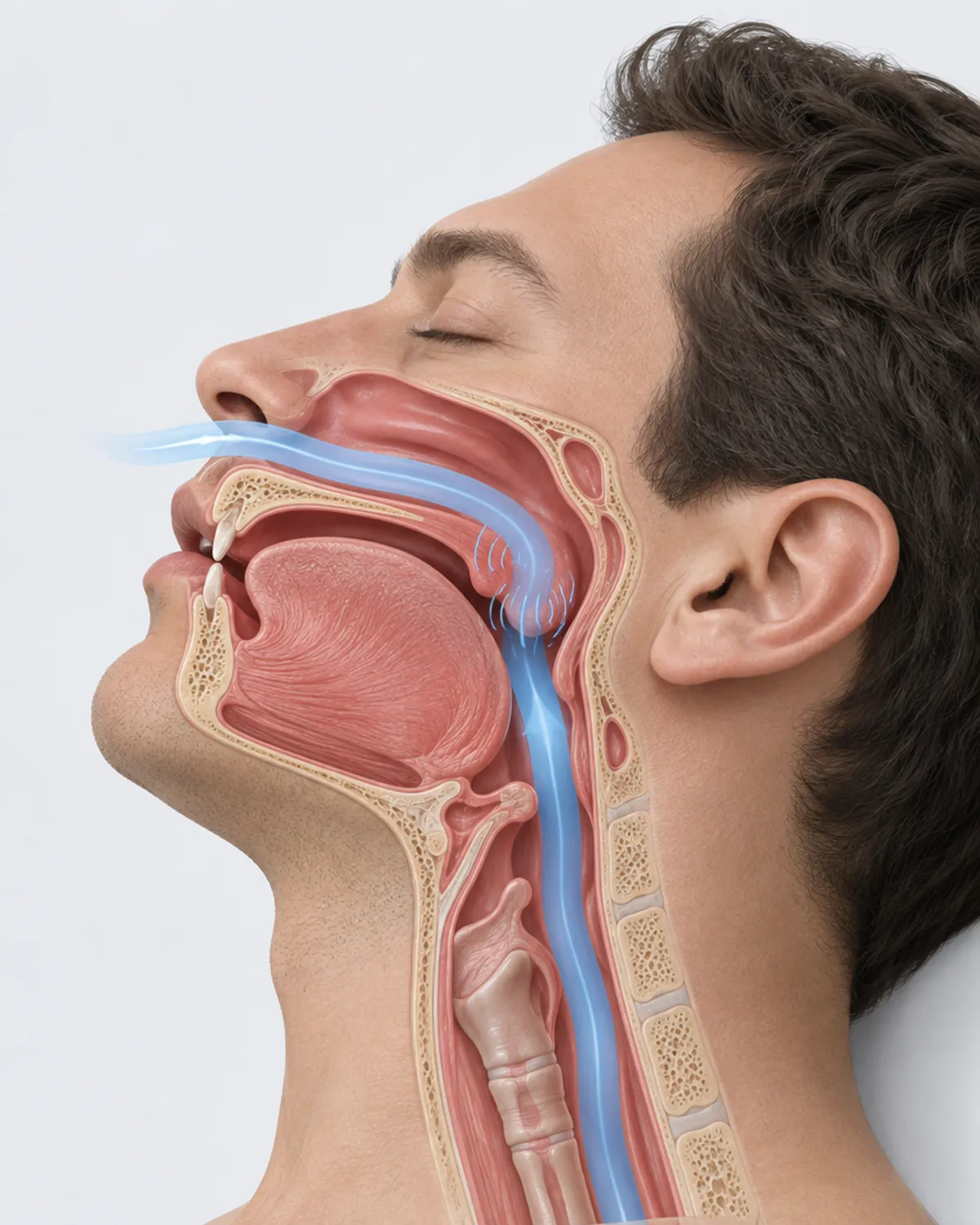
Simple snoring單純性鼻鼾
During sleep, relaxed muscles and lying flat narrow the airway, and the airflow vibrates the soft tissues, causing the snoring sound.
Snoring & Obstructive Sleep Apnea
Snoring can be a sign that your health is at risk. More than 100,000 people in Hong Kong live with some degree of sleep apnoea, and many don't know they have it.
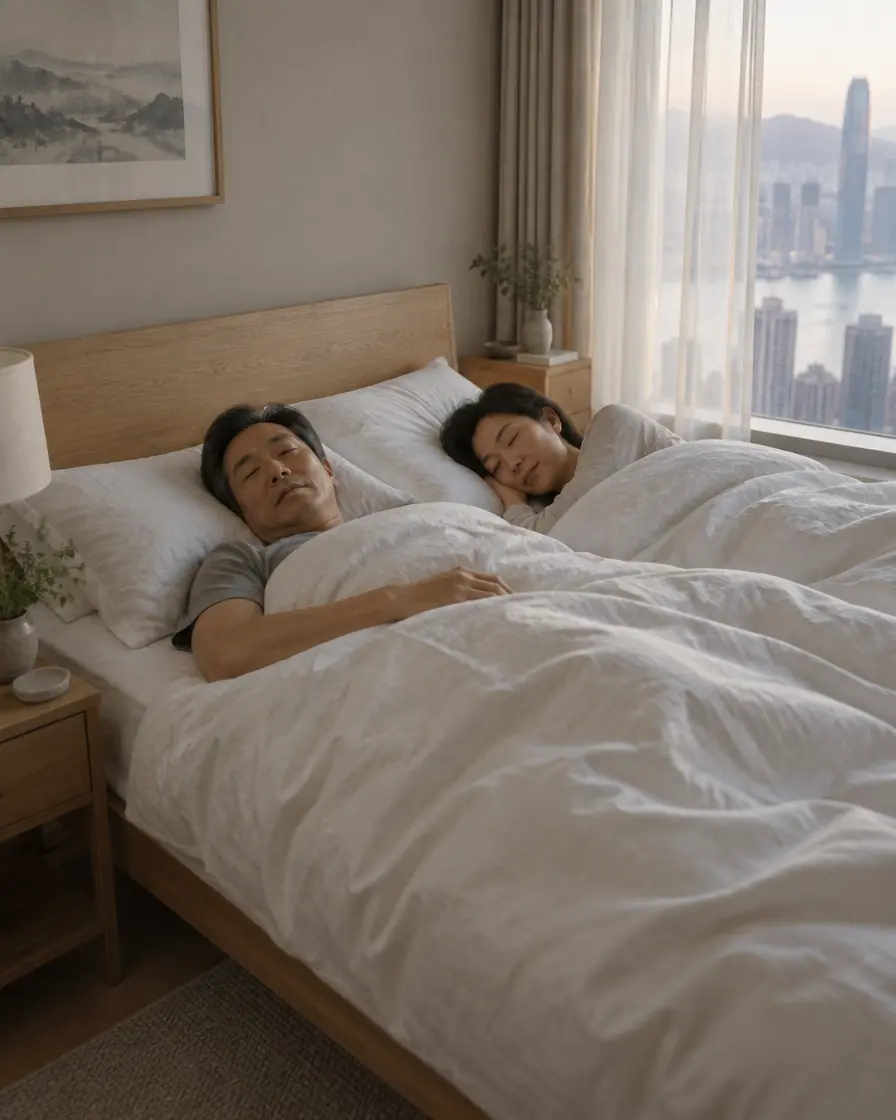
Structural factors include a receding chin, a short neck, an enlarged tongue or tonsils, and nasal problems.
Snoring can be a symptom of sleep apnoea. If it doesn't affect breathing, it isn't harmful to health — but the noise can still disturb the family.
During sleep, relaxed muscles and lying flat narrow the airway, and the airflow vibrates the soft tissues, causing the snoring sound.
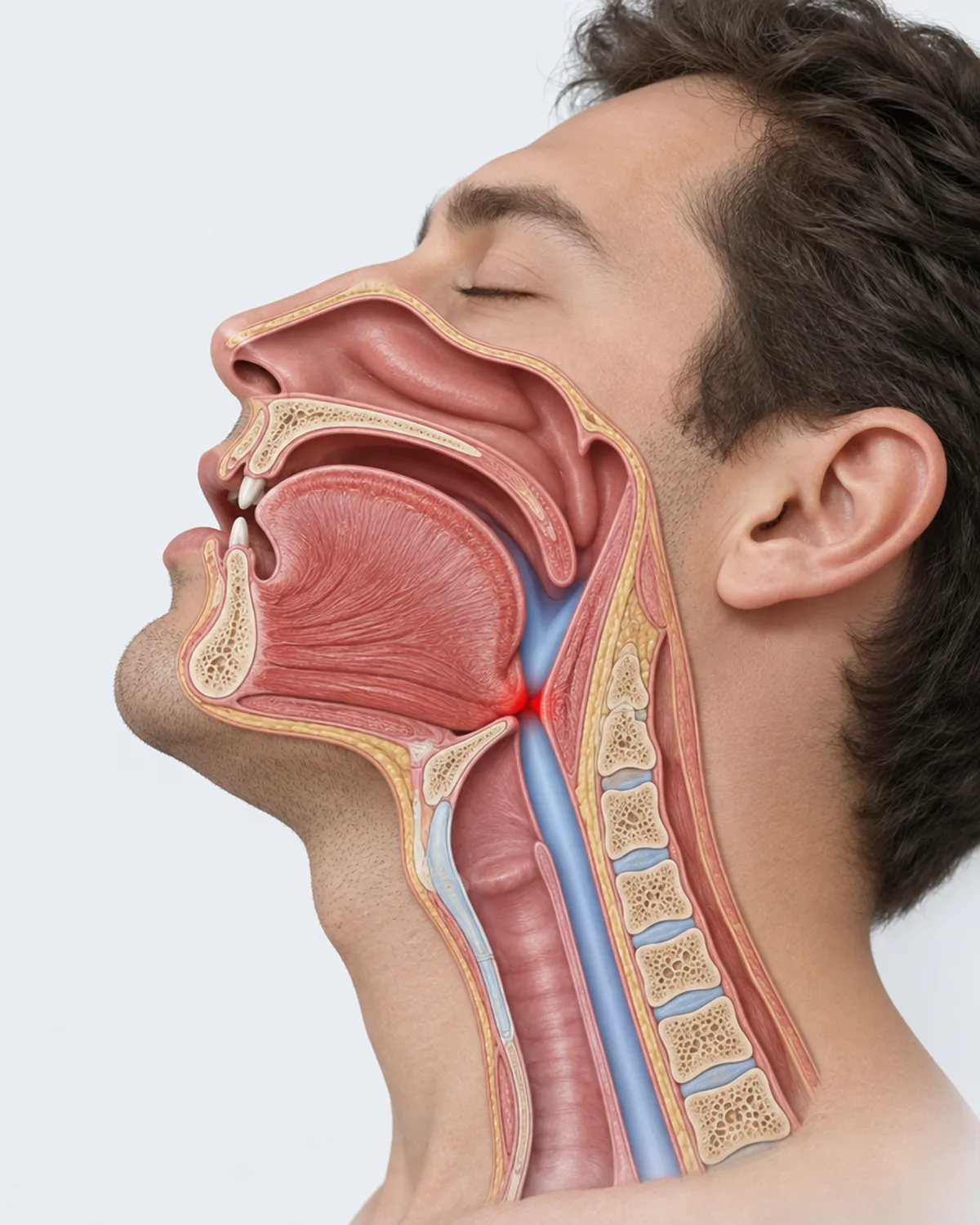
The airway narrows or even closes, causing apnoeas or hypopnoeas that interrupt sleep and oxygen supply, affecting sleep quality and health.
The average number of apnoeas or hypopnoeas per hour
Gently supports the lower jaw slightly forward during sleep to keep the airway open, reducing snoring and apnoeas.
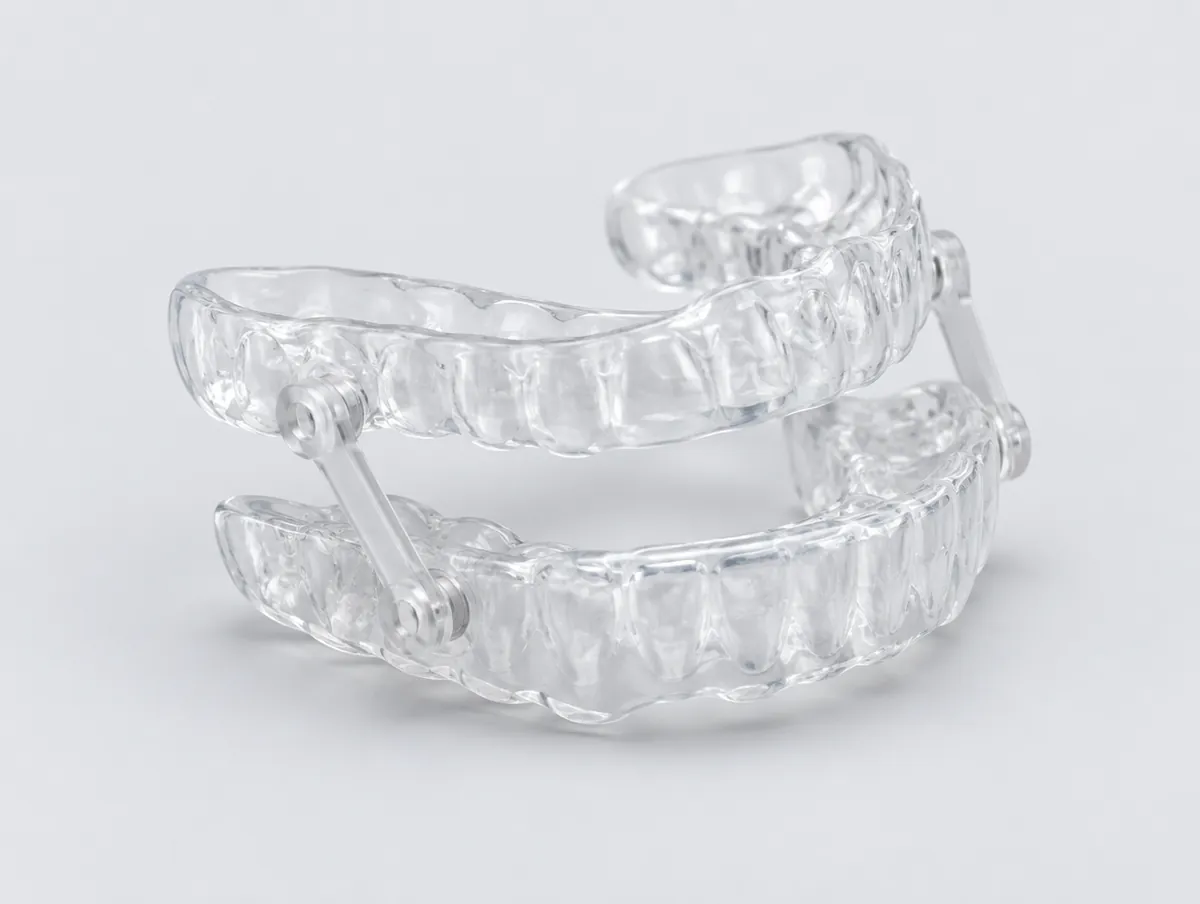 Silensor-slGermany · Strap connectors
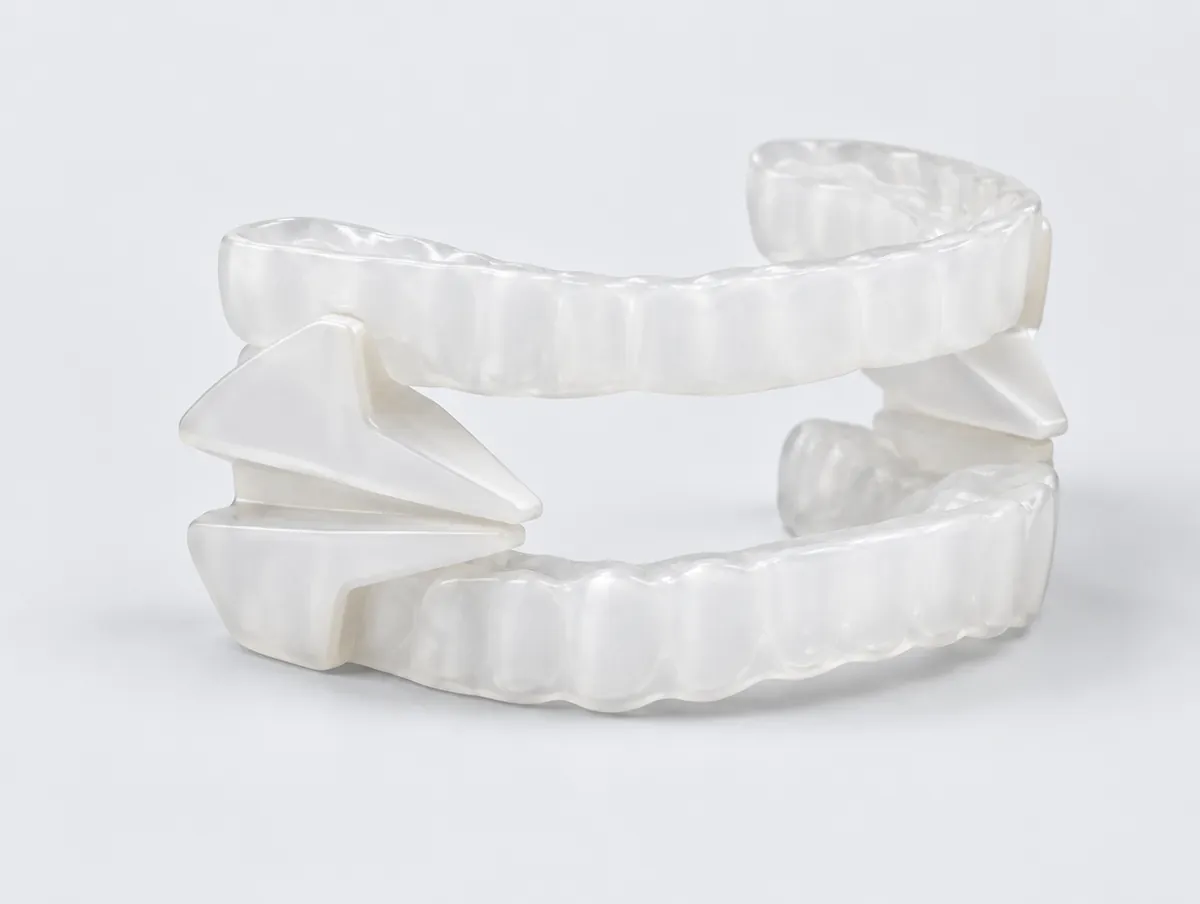 OSAWELLTaiwan · Guiding fins Compare the two anti-snoring splints: materials, adjustment, pros and cons
By severity of snoring and sleep apnoea
Scroll to see how the airway changes with the device.
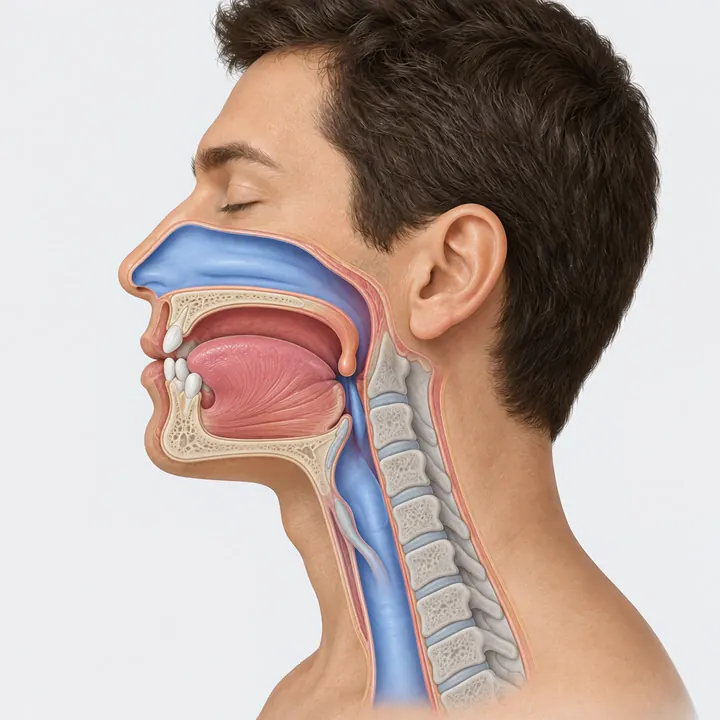
Lying asleep, the tongue base and soft palate fall back and narrow the airway; obstructed airflow causes snoring and, in severe cases, apnoeas.
Custom upper and lower trays, linked together, hold the lower jaw — and the tongue base with it — slightly forward.
The tongue base moves away from the back of the throat, the airway opens up, and snoring and apnoeas are reduced.
Sleep at home for one night with a monitor to find your number of apnoeas and hypopnoeas per hour.
The dentist examines the mouth and jaw; if needed, we refer you to a physician for joint diagnosis, or for drug-induced sleep endoscopy (DISE) to locate the obstruction.
A mandibular advancement device is made from your dental models to support the lower jaw slightly forward and open the airway during sleep.
The amount of advancement is adjusted gradually based on comfort and snoring improvement.
A second home AHI test compares before and after objectively.
Still have questions? Call or WhatsApp any of our clinics.
Not necessarily. Simple snoring that doesn't affect breathing is not harmful to health, although the noise can disturb others; sleep apnoea is when the airway narrows or even closes, interrupting sleep and oxygen supply. A sleep test (AHI) tells them apart.
The Apnoea-Hypopnoea Index is the average number of apnoeas or hypopnoeas per hour: under 5 is normal, 5 – 15 mild, 15 – 30 moderate, and over 30 severe.
People with simple snoring, mild to moderate and some severe sleep apnoea, those who cannot tolerate CPAP, frequent travellers, or as part of combined treatment.
From HK$3,500, including a home AHI sleep test before and after treatment, reviews and device adjustments. A home AHI sleep test alone is HK$500.
Reference figures: snoring improves in about 85 – 90%, mild sleep apnoea about 70 – 80%, moderate about 55 – 65%, and severe about 40 – 60%.
CPAP is the first-line treatment; other options include changing sleep position, exercise, weight loss or surgery. Sleep apnoea should be diagnosed and treated jointly by a physician and a dentist.
We are open on Saturdays and Sundays (closed on public holidays), and you can enquire or arrange an emergency appointment by WhatsApp. Fill in the form and press Send — WhatsApp opens with your message ready, and our staff will reply as soon as possible.
CentralRoom 501, Peter Building, 58-62 Queen's Road Central
Taikoo ShingShop P-411, Ming Kung Mansion, 22 Taikoo Shing Road
Shau Kei WanShop L1, G/F, Fung Yuen Building, 388A Shau Kei Wan Road
Central 2523 0214 / 2526 8247
WhatsApp 6735 8088
Taikoo Shing 2568 8879 / 2567 1476
WhatsApp 9738 0143
Shau Kei Wan 2884 2380 / 2884 2966
WhatsApp 9380 7496
Monday to Saturday
10:00 – 19:00
Sunday
10:30 – 17:30
Public holidays
Closed
At all clinics
To change an appointment, please contact the clinic at least 48 hours in advance. Check-ups and consultations alone are welcome.